Scaling down Green Transition: Co-creating Nature-Based Solutions at the neighborhood level
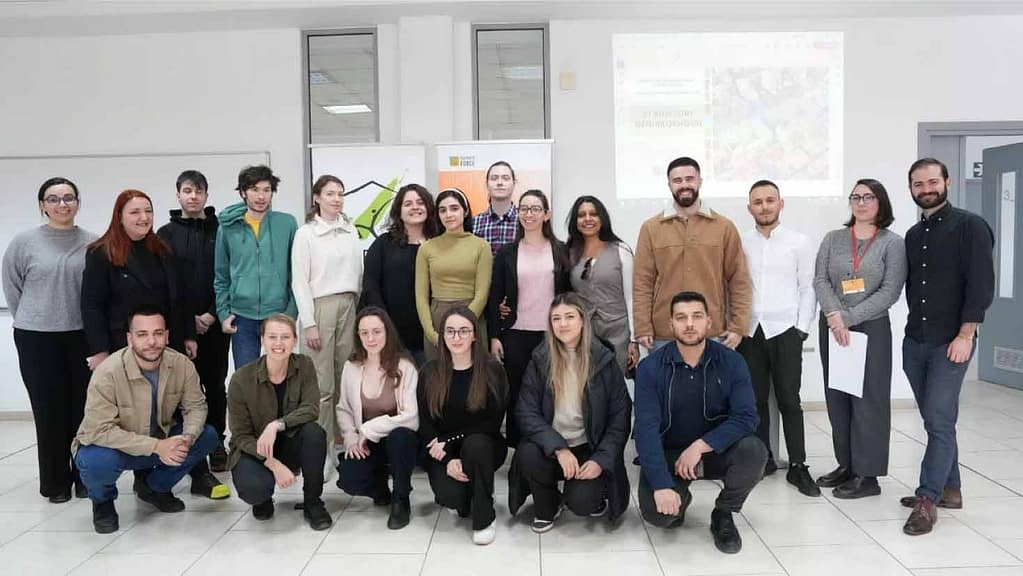
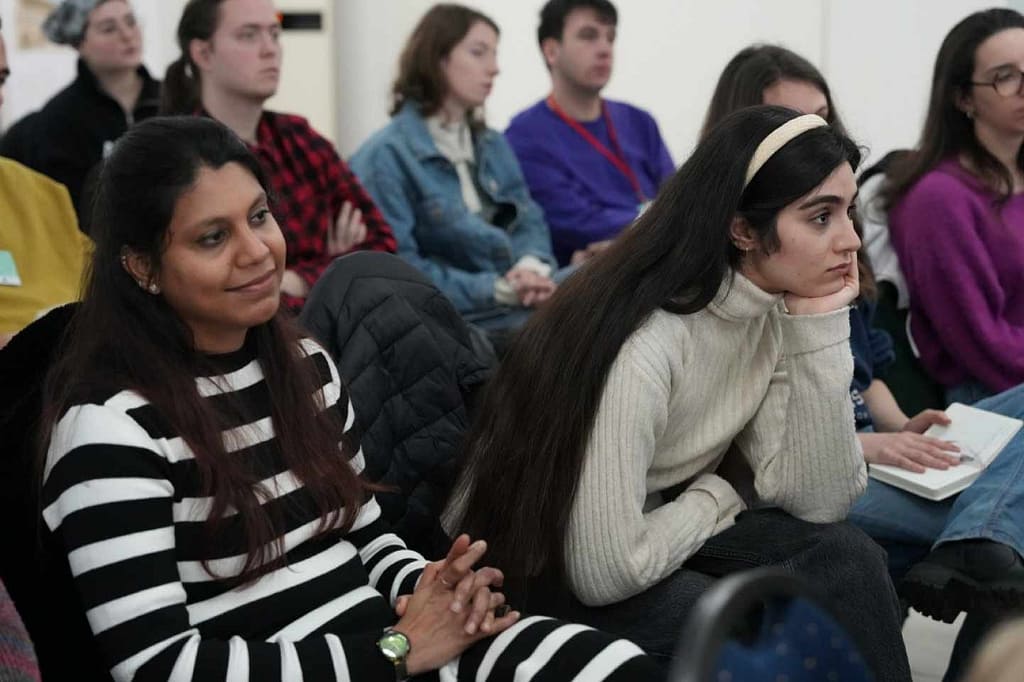
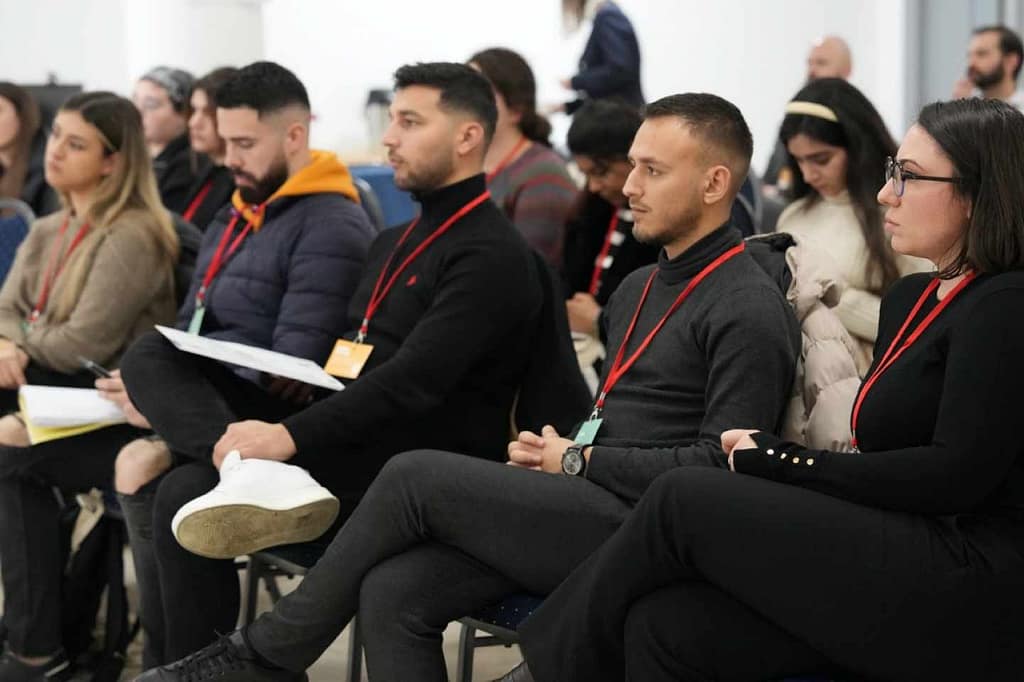
From February 17–21, 2025, Tirana hosted the third edition of the GreenFORCE International School under the theme “Scaling down Green Transition: Co-creating Nature-Based Solutions at the Neighborhood Level.” The Winter School brought together students, researchers, and urban practitioners from across Europe, fostering a collaborative platform to explore how Nature-Based Solutions (NBS) can meaningfully address environmental challenges at the community scale.
The Winter School was organized by Co-PLAN, Institute for Habitat Development (the leading partner of the GreenFORCE project), in collaboration with POLIS University and the project consortium, Politecnico di Torino, Nordregio, University of Belgrade, and Center for Economic Analyses.
The program unfolded in three key phases:
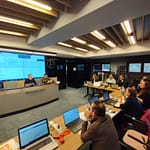
- Online Kick-off and Lectures (January 28, February 5 and 12) – Students were introduced to theoretical concepts, frameworks, and tools for understanding NBS, setting the stage for their work in Tirana. These lectures featured esteemed researchers and experts from Sweden, Italy, Serbia, North Macedonia, and Albania.
- On-site Activities (February 17–21) – The heart of the Winter School, featuring field visits, group work, and design studios.
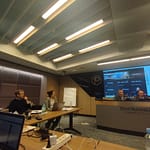
- Final Presentations (March 10) – A post-event online session where student teams shared their refined proposals.
Learning Through Immersion
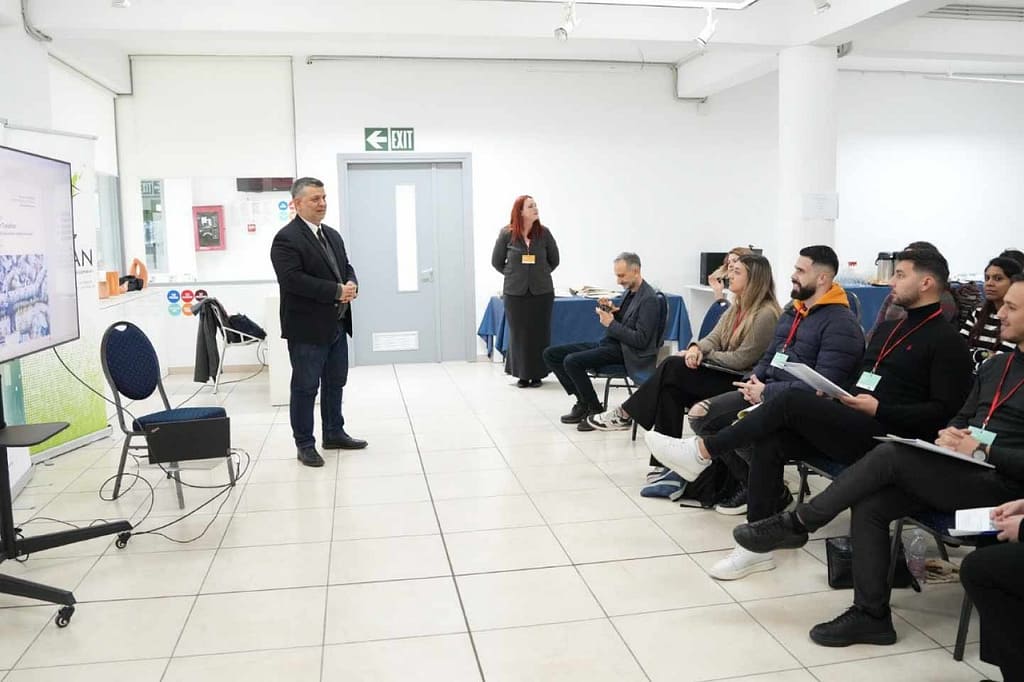
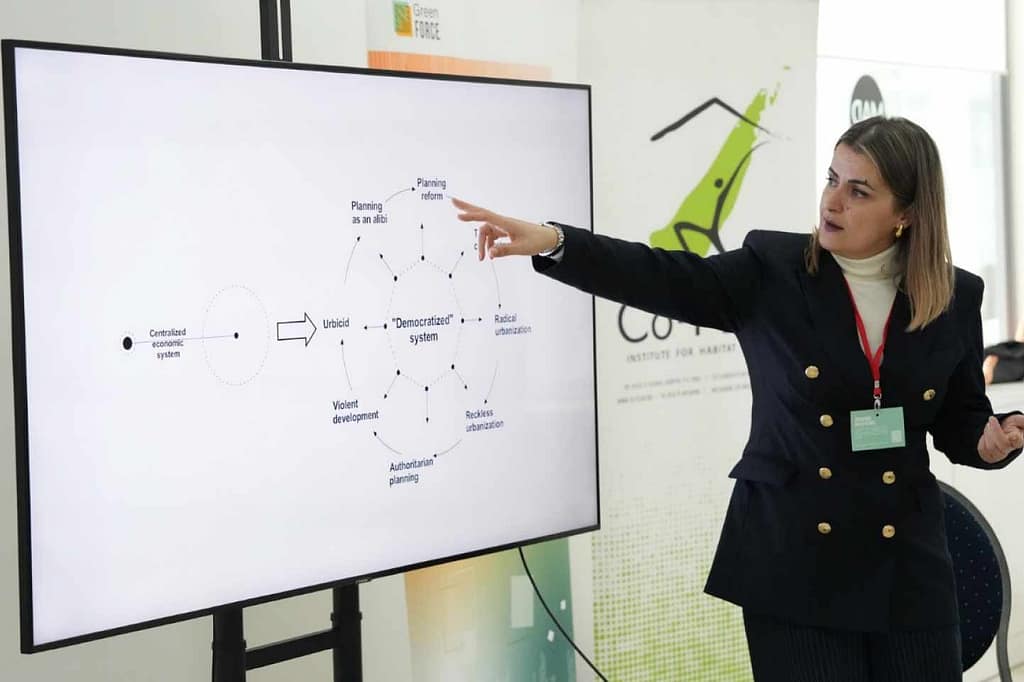
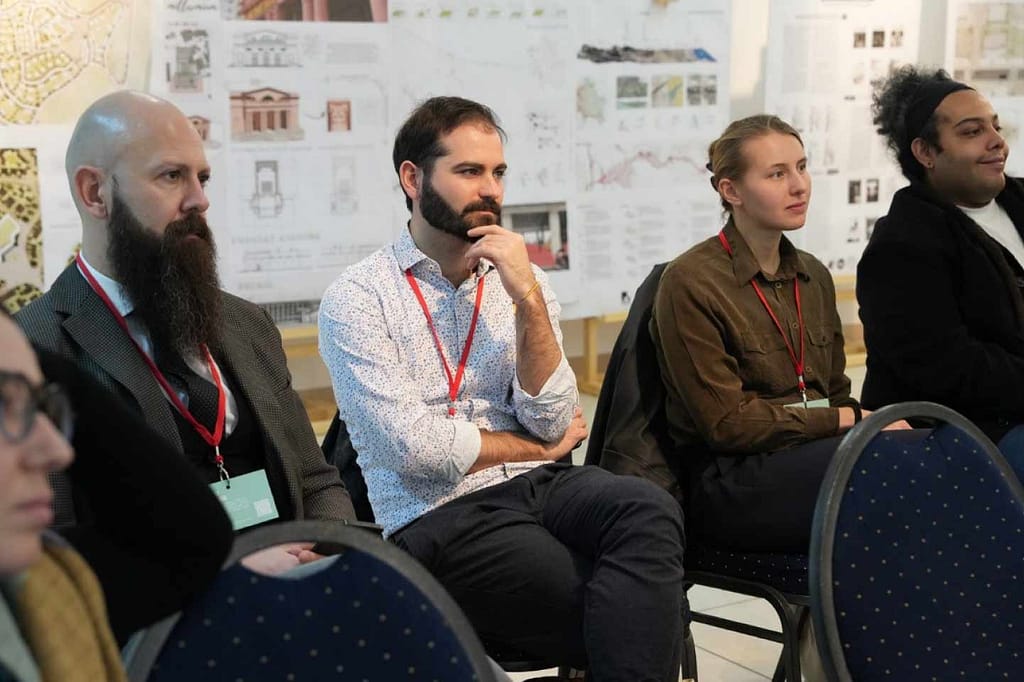
The in-person segment began with a warm welcome at POLIS University by Prof. Dr. Besnik Aliaj, who underscored the value of international academic exchanges in shaping better urban policies and strengthening academic collaboration in environmental and planning disciplines. Afterwards, Dr. Doriana Musaj led an insightful presentation on Tirana’s evolving urban landscape, setting the contextual tone for the fieldwork ahead.
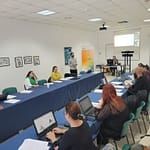
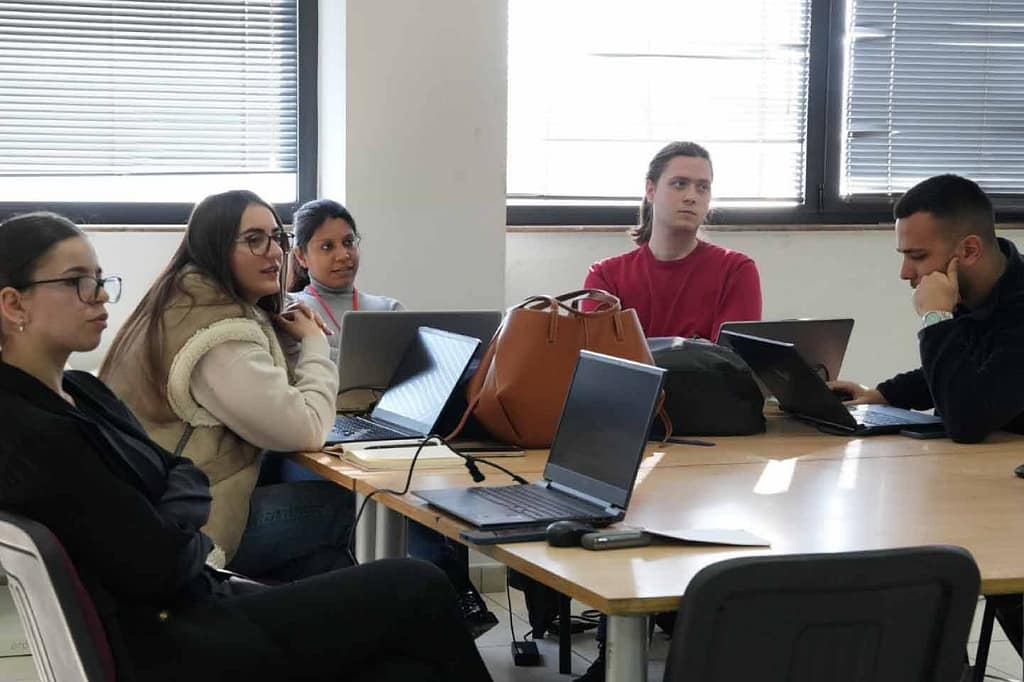
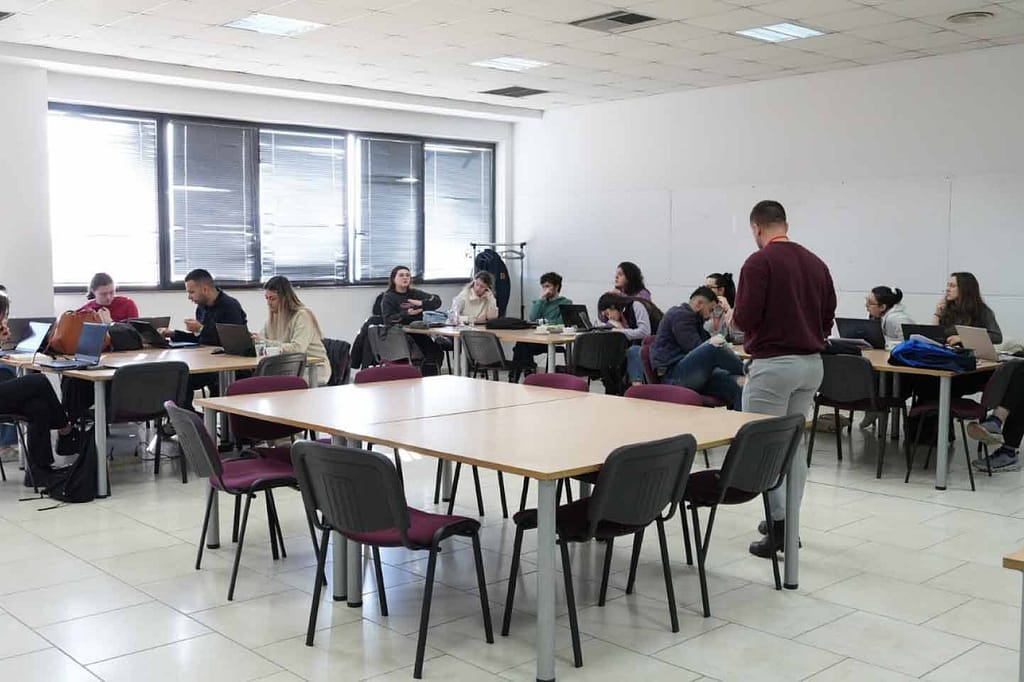
Students were divided into teams and engaged in an immersive role-playing and design thinking exercise, exploring innovative NBS concepts tailored to neighborhood challenges.
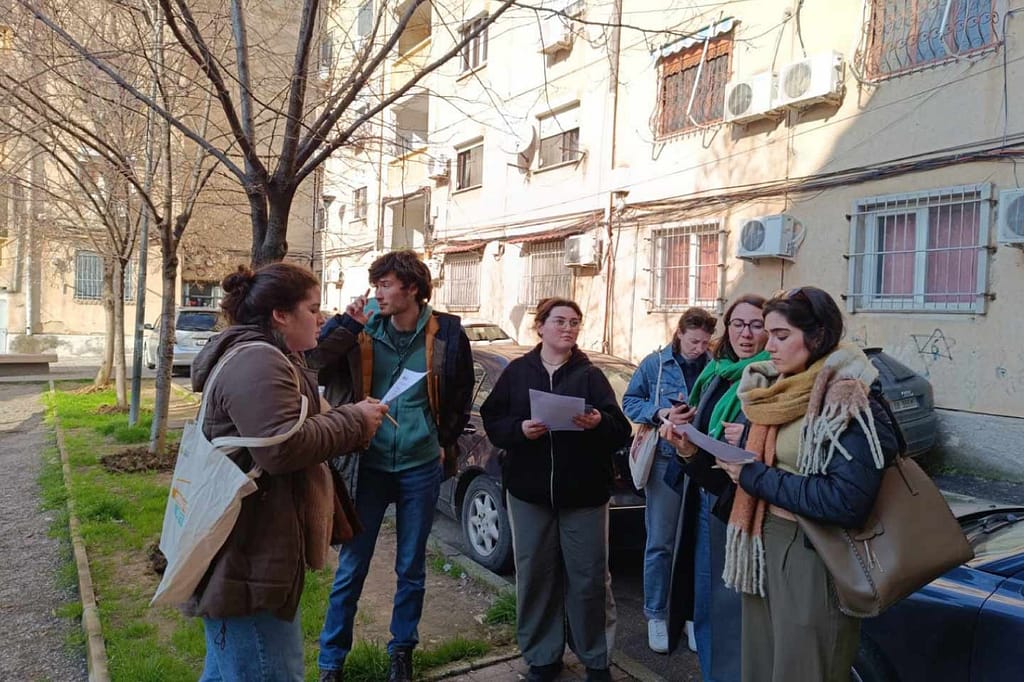
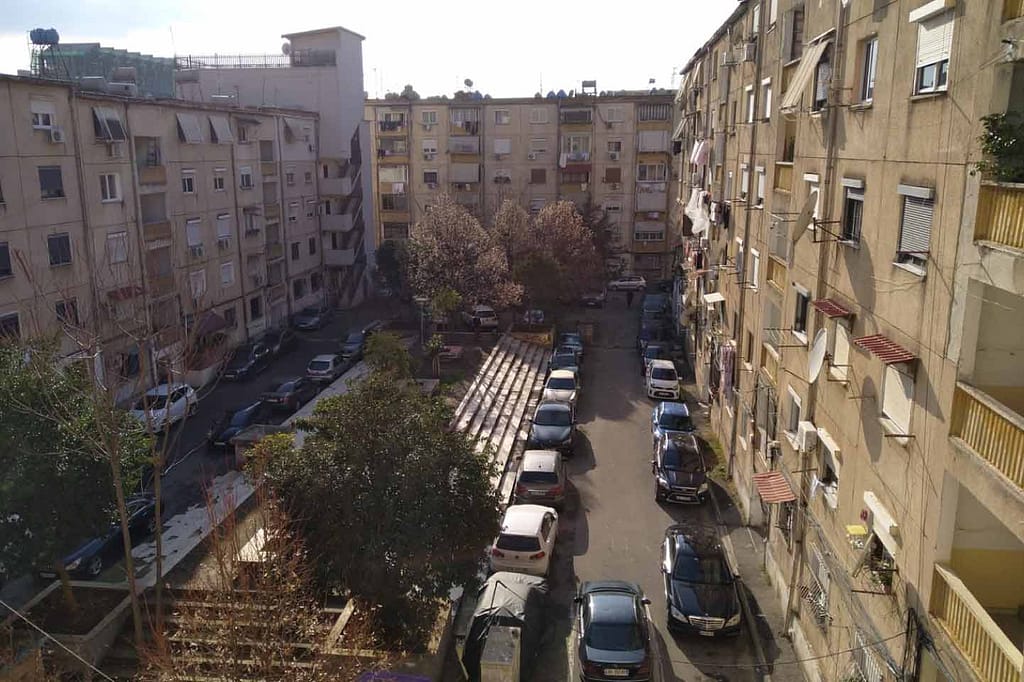
As the days progressed, the Winter School evolved into an interactive environment full of exploration and experiential learning. A guided tour of Tirana’s urban fabric—led by local experts—highlighted issues such as rapid urbanization, spatial fragmentation, and the need for green, inclusive interventions.
Students were divided into three teams and focused their efforts on three distinct neighborhoods in Tirana—each selected for their unique socio-environmental characteristics and potential for transformation. Working alongside experienced mentors, the teams conducted detailed site analyses, observed local conditions, and gathered feedback from community members.
Studio Sessions and Scenario Development
The fieldwork set the stage for the collaborative design phase, where participants identified key challenges and began crafting Nature-Based Solutions.
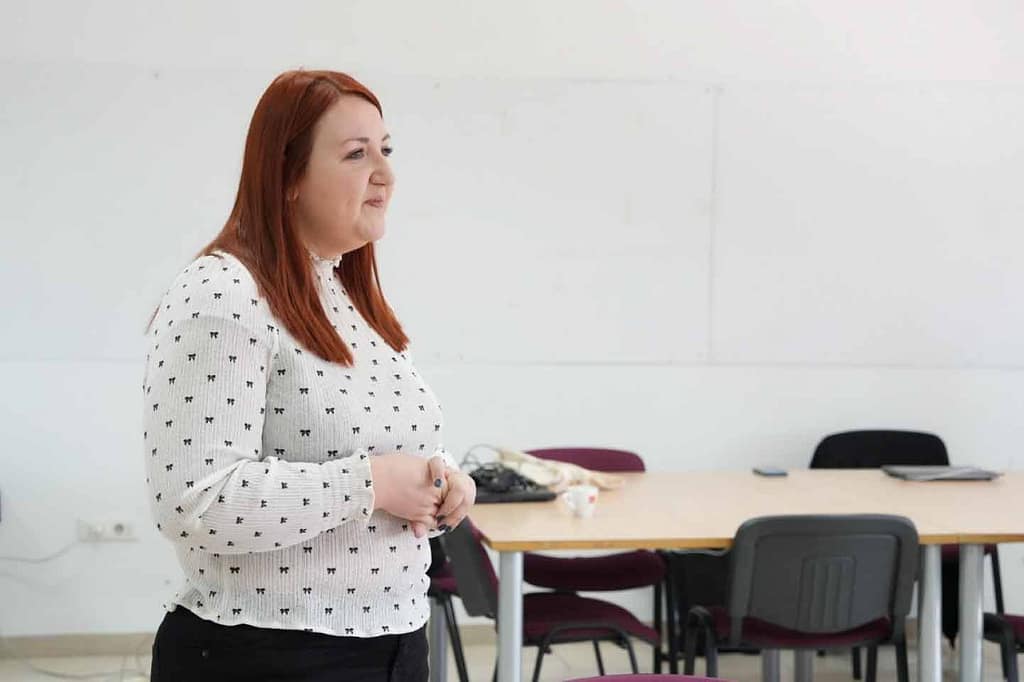
Back at POLIS University, the studio became a laboratory for creativity. With guidance from an international teaching staff, participants transformed field data into design scenarios, applying environmental modeling tools and ecosystem service assessments. Themes such as urban heat islands, rainwater management, green public spaces, and community resilience featured prominently in their proposals.
Dialogue with Local Authorities
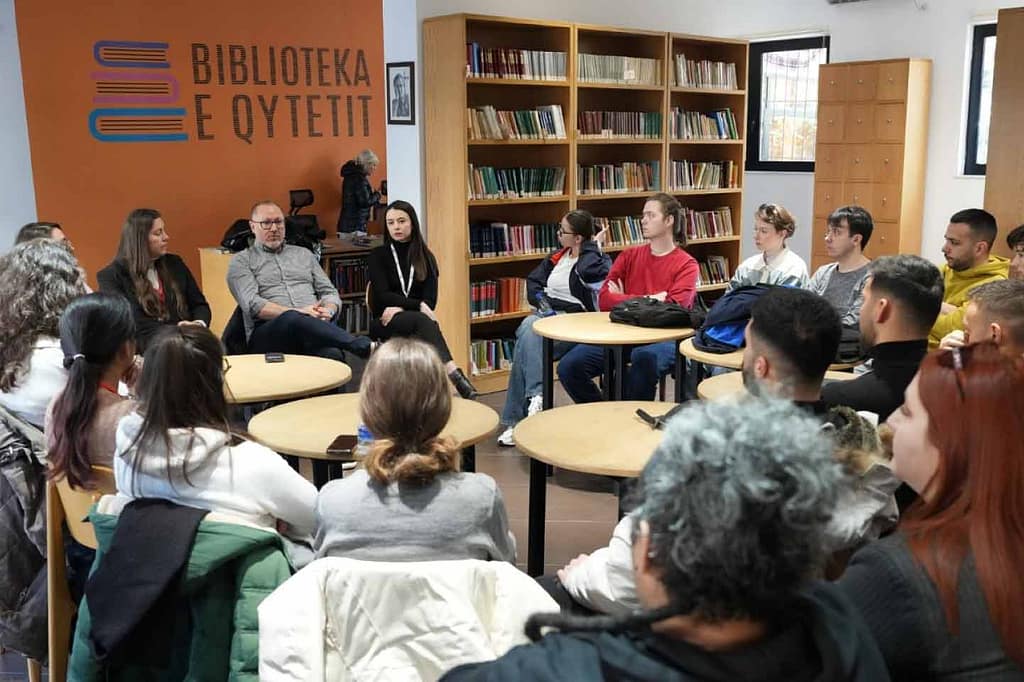
A highlight of the Winter School was the session with Genci Kojdheli, General Director of Integration, Strategic Planning, and Economic Development at the Municipality of Tirana.
This engaging discussion explored Tirana’s ongoing efforts to embed green transition principles into urban planning, highlighting the critical role of community trust in energy efficiency projects and the complexities of managing rapid urban growth sustainably. The exchange offered students meaningful perspectives on governance and policymaking, reinforcing the real-world applicability of their ideas.
Pitching Ideas and Celebrating Innovation
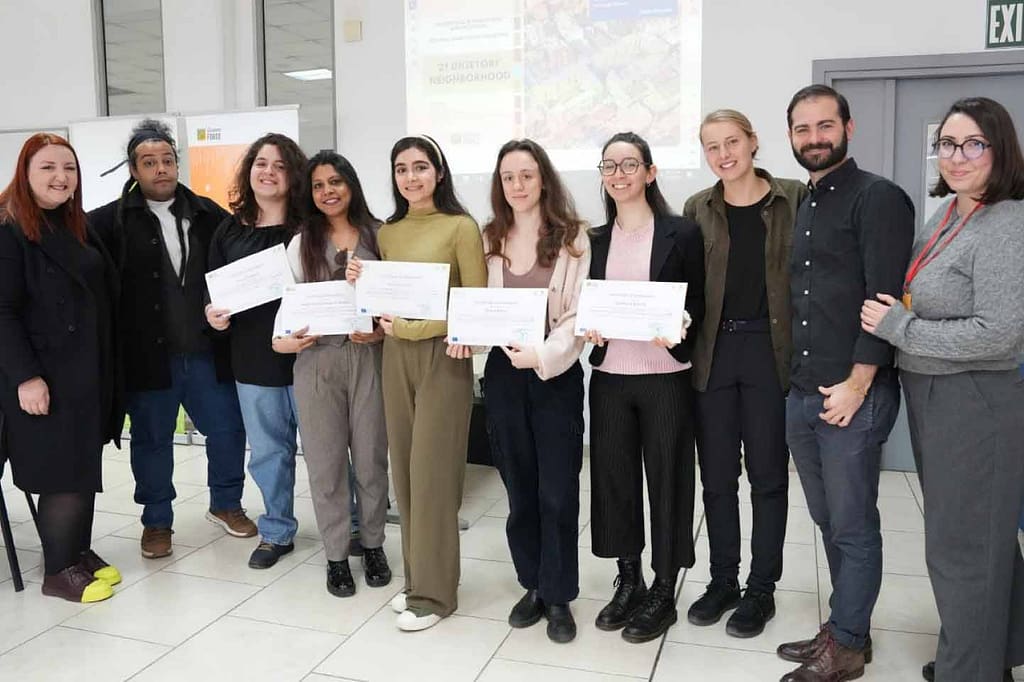
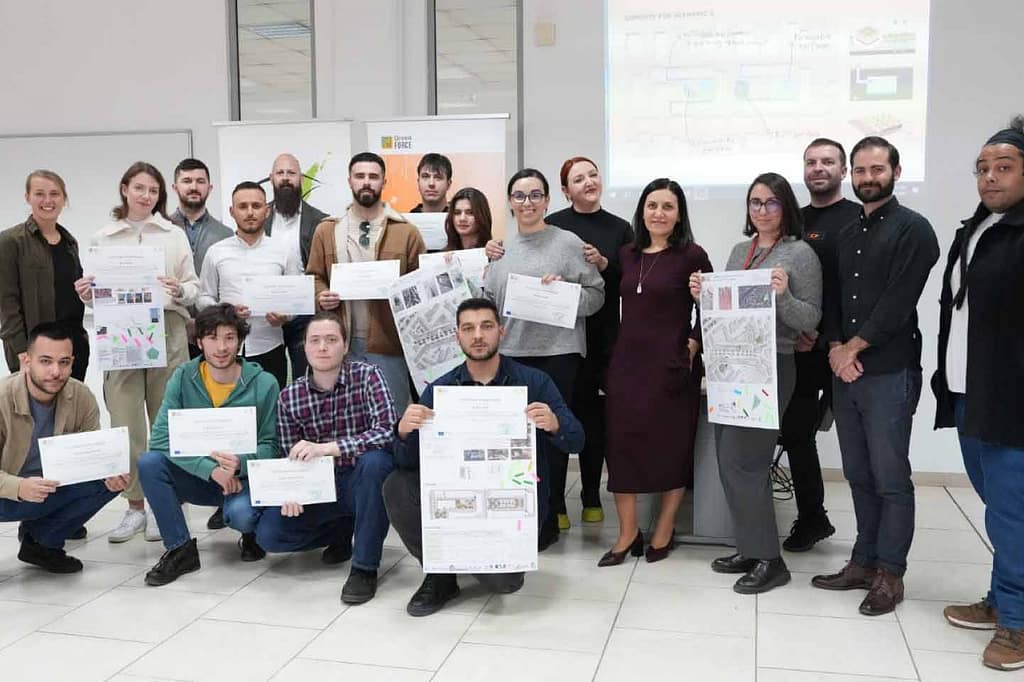
On the final day, student teams presented their proposals in a vibrant pitching session evaluated by faculty experts. Their ideas showcased innovative, yet feasible, solutions—from pocket parks to green rooftops and multifunctional public spaces. Under the moderation of Dr. Kejt Dhrami, the event concluded with a fun and interactive “voting game,” followed by a certificate ceremony and farewell cocktail.
The Winter School emphasized that neighborhoods are the frontlines of climate action. Localized, nature-based interventions can create visible improvements in quality of life—cleaner air, cooler streets, more vibrant social spaces—while contributing to broader sustainability goals like the EU Green Deal and the Green Agenda for the Western Balkans.
To read the reports provided by each team of students, click on the below: